
Original Book | 1945
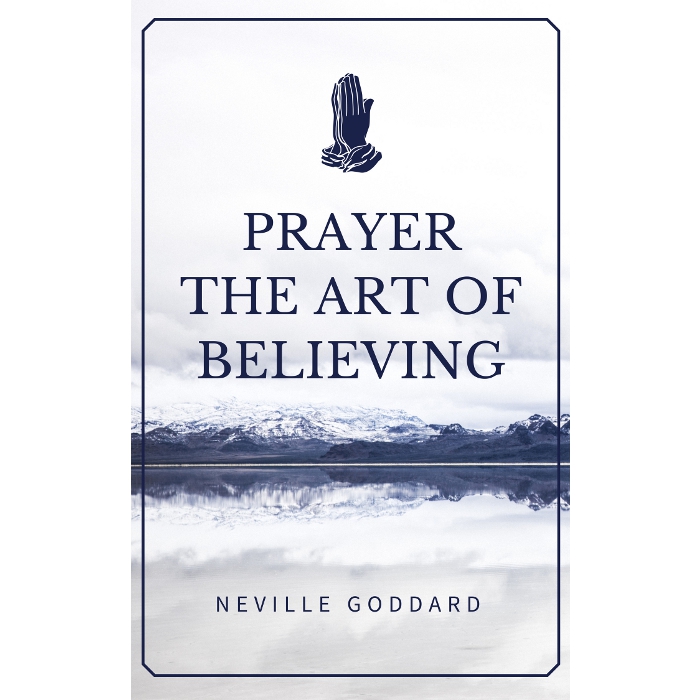
Prayer: The Art of Believing by Neville Goddard
Prayer: The Art of Believing is Neville Goddard's book on prayer as inner acceptance, controlled imagination, belief and the creative use of consciousness. It teaches prayer as something practiced inwardly, where the desired state is accepted as real before it is seen.

Book Guide
Prayer As A Trained Inner Act
Prayer: The Art of Believing gives prayer a precise meaning in Neville's work. Prayer is not public performance, empty repetition or pleading from a distance. It is a controlled inner act in which imagination, feeling and belief move together until the desired state is inwardly accepted as true.
What Prayer: The Art of Believing Is About
This book explains prayer as a creative practice. Neville begins by saying prayer is an art and requires practice, which immediately changes the subject from religious habit into deliberate inner work. Prayer has to be learned, refined and entered with attention. It is not the number of words that matters. It is the state accepted in consciousness.
The book is especially helpful because it explains why imagination must be controlled. Neville does not mean harsh control or mental strain. He means the ability to direct attention inwardly and remain with the desired state long enough for it to feel real. Prayer is done in secret because the real movement happens inside consciousness, away from the noise of appearances.
Neville also explores the dual nature of consciousness: the conscious and subconscious aspects of mind. The conscious mind chooses and directs. The subconscious accepts impressions and expresses them. Prayer works when the conscious desire is impressed upon the deeper mind with belief. This is why feeling, faith and imagination are not separate from prayer. They are the way prayer becomes effective.
The chapters move through the law of reversibility, imagination and faith, controlled reverie, thought transmission, good tidings and the greatest prayer. Each one adds a practical layer. Together they show prayer as the art of assuming inwardly what you desire to experience outwardly.
The Main Ideas To Understand First
Prayer Happens In Consciousness
The real prayer is the inner state you accept, not the public words spoken about it. Neville brings prayer into the quiet creative life within.
Imagination Must Be Directed
Controlled imagination means attention is placed on the fulfilled state and kept there with calm, focused acceptance.
Belief Gives Prayer Substance
Prayer becomes creative when the desired condition is believed inwardly, felt as real, and accepted by the deeper mind.
Good Tidings Are Heard Within
Neville shows how hearing good news in imagination can imply the answer and carry the feeling of fulfilled prayer.
The Law Of Reversibility
The law of reversibility is one of the most important ideas in this book. Neville explains that if a physical fact can produce a psychological state, then the psychological state can also produce the corresponding physical fact. If news of success would make you feel relief, then entering the feeling of relief can become the inner cause that belongs to success. If being loved would make you feel secure, then assuming that security inwardly is the prayer's beginning.
This is practical because it gives you a way to pray without waiting for the outer condition. You do not wait for the world to make you feel fulfilled. You reverse the process. You enter the feeling that would naturally follow fulfillment, and you let that state impress consciousness.
Reversibility also keeps prayer from becoming vague. You ask: what feeling would be mine if the prayer were answered? What would I know? What would relax? What would no longer be questioned? Then you enter that inner condition. The feeling is not pretend emotion. It is the accepted psychological state that corresponds to the fulfilled fact.
This is why Neville calls prayer an art. It takes practice to move from reacting to appearances into deliberately accepting the unseen state. But once the principle is understood, prayer becomes clearer. You are not trying to convince a distant power. You are entering the state that implies the answer.
The Conscious And Subconscious In Prayer
Neville's chapter on the dual nature of consciousness gives the book its practical structure. The conscious mind chooses the aim. It defines what is desired and directs attention. The subconscious receives the impression and gives it form. The two are not enemies. Prayer works when they are brought into agreement.
Many people pray from conflict. Consciously they ask for one thing, while inwardly feeling the opposite as more real. Neville's method is to end that division. The desire must be accepted with enough feeling and belief that the subconscious receives it as true. This is why the quality of inner acceptance matters more than repeated words.
The subconscious does not need a long explanation. It receives the state impressed upon it. A short scene, a heard sentence, a feeling of relief or a quiet certainty can be enough when it carries the sense of answered prayer. The art is in choosing the fulfilled state and entering it without inner contradiction.
This makes the book valuable for anyone whose practice feels scattered. You can stop trying to say everything perfectly and begin asking what state you are impressing. The deeper mind responds to accepted reality. Prayer therefore becomes the art of giving the subconscious the fulfilled state.
Imagination And Faith
Imagination and faith belong together in this book. Imagination gives you the ability to enter the desired state before the senses confirm it. Faith is the inner acceptance that what is entered in imagination is real. Without imagination, prayer can remain abstract. Without faith, imagination can remain a passing picture. Together they become creative prayer.
Neville does not ask you to imagine endlessly. He asks you to imagine effectively. That means the imaginal act should imply fulfillment. If you want healing, imagine the state of being well. If you want reconciliation, imagine the relationship restored. If you want success, imagine the outcome already recognized. The act should place you inside the answer.
Faith then holds the answer inwardly. It does not keep asking from absence. It does not constantly look for proof. Faith treats the unseen state as the inner fact. That is what makes prayer powerful in Neville's teaching: the answer is accepted in consciousness before it is seen in the world.
This is where the book becomes deeply practical. You can ask yourself whether your imaginal act gives you the feeling of completion. If it does not, simplify it. Hear one sentence. Feel one touch. See one ordinary moment after the result. Let faith rest in that moment until it feels natural.
Controlled Reverie And Inner Hearing
Controlled reverie is Neville's way of describing a relaxed but directed inward state. You are not asleep, and you are not forcing thought. You are inwardly receptive while still choosing the direction of imagination. This is a powerful place for prayer because the mind becomes quiet enough to receive the fulfilled state.
In this state, inner hearing can be especially effective. Neville often teaches the use of imagined words that imply the end is done. You might hear congratulations, relief, gratitude, affection or good news. The power is not in the words alone. The power is in what the words imply and the state they awaken.
If someone would say "I am so happy for you" after your desire was fulfilled, hearing that inwardly can carry the whole answer. If you would hear "everything is settled," "you are well," "it worked," or "I love you," those words can become a prayer when they are heard with the feeling of reality.
Controlled reverie helps because it gathers the mind. Instead of letting imagination run through fear, argument and delay, you bring it to one fulfilled implication. The prayer becomes simple enough to receive. You enter the answer, feel it, and let it impress consciousness.
Good Tidings And Thought Transmission
The chapters on good tidings and thought transmission show Neville applying prayer beyond private desire. Good tidings are the inward acceptance of good news. You hear what would be true if the desired end were fulfilled, and you receive that news in imagination as fact. This can be used for yourself or for another person.
Thought transmission, in Neville's teaching here, is not casual mental interference. It belongs to the idea that consciousness is not sealed off in the way the senses suggest. The state you accept of another can be part of prayer. You can inwardly hear good news about them, see them free, well, loved or successful, and accept that state on their behalf.
This is one of the most beautiful parts of the book because it turns prayer into blessing. You do not have to repeat worry about someone in the name of love. You can pray by accepting their fulfilled state. You can hear them tell you the good news. You can feel the relief and gratitude as though it were already so.
The key is to keep the prayer clean. Hear the good news, accept it, and rest in it. The imagined conversation should not become a new way to rehearse fear. It should carry the certainty and kindness of the fulfilled answer.
The Greatest Prayer
The greatest prayer in Neville's work is not a long speech. It is the deepest acceptance of fulfilled being. It is the state in which you and the answer are no longer separated in consciousness. The desire has moved from request into identity. You are inwardly standing where the answer is true.
This is why prayer can feel quiet when it is successful. The struggle drops. The need to persuade drops. The inner argument drops. You may feel relief, gratitude, stillness or simple naturalness. That naturalness is important because the fulfilled state has begun to feel like home.
The greatest prayer is also love-filled. When you pray for another, you do not hold them as trapped, broken or hopeless. You accept them in the state of the answer. You give them good tidings in imagination. You let your inner conversation agree with their freedom and fulfillment.
This brings the book back to Neville's essential teaching. Prayer is creative because consciousness is creative. Believe the answer. Feel the answer. Hear the answer. Accept the answer. Then remain faithful to the state in which the prayer is already fulfilled.
How To Practice What This Book Teaches
Choose one desire or one person you want to bless. Ask what would be true if the prayer were already answered. Let the answer become specific enough to feel. You might hear a sentence, see a scene, feel relief in your body, or know inwardly that the matter is settled.
Enter a quiet state. Let the body relax and the mind become still. Bring the fulfilled implication into imagination. Do not make it long. If a short sentence carries the answer, use the sentence. If a small scene carries the answer, use the scene. Stay with it until it feels accepted.
Then let the prayer be complete. Return to the state when needed, but do not keep reopening the desire from fear. The aim is to believe. Belief here means inner acceptance. You are learning to let the fulfilled state feel more real than the old report.
During the day, listen to your inner conversations. If they contradict the prayer, bring them back to good tidings. Hear the answer again. Let your private speech agree with what you have accepted. This is how prayer becomes part of daily consciousness.
How To Read This Book With Real Understanding
Read Prayer: The Art of Believing as a manual for inner practice. Each chapter gives you a different angle on the same art: how to accept an unseen state as real. Keep the reading practical by asking what Neville is telling you to do inwardly.
When he speaks of reversibility, find the feeling that would follow fulfillment. When he speaks of the subconscious, ask what impression you are giving it. When he speaks of imagination and faith, ask whether your imaginal act truly implies the answer. When he speaks of good tidings, listen for the sentence that would carry the fulfilled news.
This book is especially useful when prayer has felt distant or religious in a way that does not help you practice. Neville makes prayer intimate. It happens within you, in the state you accept as true. Read slowly and let each chapter train that inner art.
Read The Original Book
Download The Free Neville Book Collection
Continue into Neville's original words through the free Neville Goddard Manifesting book collection. Use this guide to understand the book, then read the full text so Neville's teaching on prayer, belief and imagination stays in his own language.
Download the free books