
Original Book | 1941
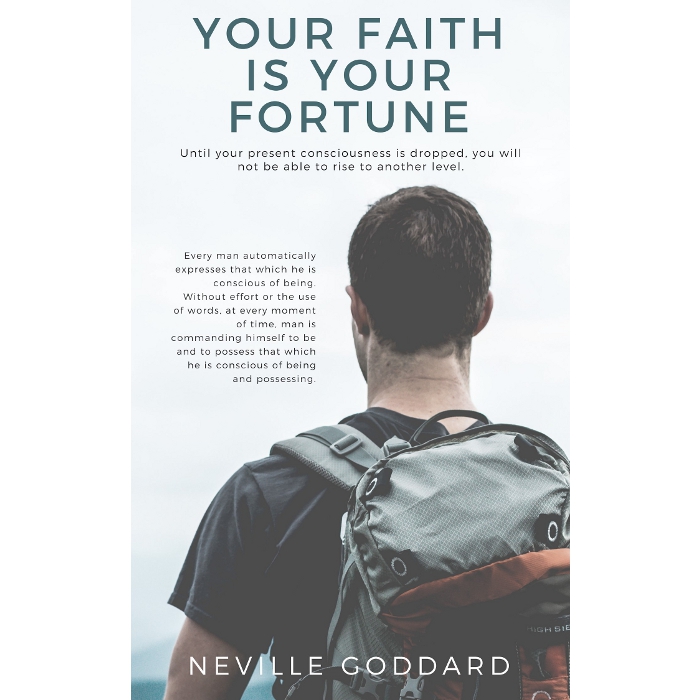
Your Faith Is Your Fortune by Neville Goddard
Your Faith Is Your Fortune is Neville Goddard's early book on faith, I AM, Scripture, prayer and the creative power of inner conviction. It teaches that faith is not vague hope. Faith is the consciousness you accept as true before the world shows it back to you.

Book Guide
Faith As The Inner Reality You Live From
Your Faith Is Your Fortune takes Neville's teaching on I AM and carries it deeply into Scripture. The book explains faith as something more exact than optimism. Faith is the unseen reality you are inwardly loyal to. It is what you accept, return to, and identify with before the senses have changed.
What Your Faith Is Your Fortune Is About
This book is about the power of belief when belief is understood as consciousness. Neville is not asking you to believe in a distant possibility while secretly feeling the opposite. He is showing that what you accept yourself to be becomes your world. Faith, in this book, is your inner allegiance. It is the state you keep giving reality to.
The title can be understood very simply: your fortune is the world that grows out of your faith. Fortune does not mean luck in Neville's use here. It means the experience, condition, and harvest that follow the consciousness you occupy. If you are faithful to lack, rejection, struggle or delay, those states keep feeling natural. If you become faithful to fulfillment, love, abundance, health or freedom, you are entering a different cause.
Neville builds this idea through Scripture. He brings biblical phrases into the inner life and shows how they point to consciousness, imagination and identity. The book moves through I AM, God, prayer, faith, Sabbath, crucifixion, resurrection, Gethsemane, Jericho and other biblical images. Each image is used to explain how consciousness accepts a state and how that state becomes visible experience.
For a reader new to Neville, this book can feel more biblical than At Your Command or Feeling Is the Secret. That is not a detour. It is the point of the book. Neville wants the Bible to become immediate. The stories are not kept as distant religious history. They become instructions for how to think, pray, assume, rest, and remain faithful to the unseen end.
The Main Ideas To Understand First
Faith Is Inner Conviction
Faith is the reality you accept inwardly. It is not wishing hard enough. It is the quiet loyalty you give to the unseen state until it becomes natural.
I AM Is The Root
The book keeps returning to I AM because every belief depends on identity. What you are conscious of being is the foundation beneath what you expect to experience.
Scripture Is Personal
Neville reads biblical passages as movements in consciousness. God, prayer, resurrection, Sabbath and victory are brought inside where they can be practiced and understood.
Prayer Is Acceptance
Prayer is not pleading from absence. It is entering the state where the answer is already real and allowing that accepted state to become your inner dwelling place.
How Neville Defines Faith In This Book
In ordinary speech, faith often means believing something will happen one day. Neville's use is stronger. Faith is not only future expectation. It is present acceptance. You are faithful to whatever you inwardly treat as real. That may be the fulfilled end, or it may be the old story. The creative question is: what are you faithful to in consciousness?
This is why the book is so useful for understanding doubt. Doubt is not solved by arguing with yourself all day. Doubt is softened when you enter a different state and remain loyal to it. Neville's faith is not loud. It can be quiet, settled, and private. It is the inward certainty that the end is real, even when the senses still report the former condition.
The book also shows that faith and identity cannot be separated. If you believe you are unwanted, unlucky, poor, ill, behind or powerless, that belief is not floating in the air. It is tied to the I AM. It has become a self-definition. Neville's answer is to change the self-definition at the root. Faith changes when what follows I AM changes.
This makes faith practical. You do not need to wait until every fear disappears before practicing. Choose the fulfilled state, enter it inwardly, and keep returning to it until it begins to feel like your own truth. That return is faith in action. You are giving your inner loyalty to the end instead of to the evidence of delay.
Why Scripture Matters So Much Here
Your Faith Is Your Fortune is one of Neville's strongest early Scripture books. He uses biblical language throughout because he sees Scripture as a record of inner law and mystical meaning. The Bible, for Neville, tells the story of consciousness: how man names himself, how he prays, how he enters rest, how he rises, how he claims victory, and how God is discovered as I AM.
This matters because many Neville terms come alive when you see their biblical background. Sabbath becomes rest in the accepted state. Prayer becomes the inner act of belief. Resurrection becomes the rising of the fulfilled state into expression. Gethsemane becomes a symbol of creative acceptance. Jericho becomes a picture of victory through entering the state psychologically before the outer wall falls.
Neville's Scripture teaching can feel unfamiliar if you were taught to read the Bible only as outer history. His purpose is not to argue with every religious tradition. His purpose is to show how the story is fulfilled in consciousness. The value of the book is that it gives you a way to read biblical phrases as direct instruction rather than distant language.
When you read the book, pause whenever Neville explains a biblical image. Ask what the image is telling you to do inwardly. Is it asking you to accept I AM? To rest from effort? To claim the end? To feel the answered prayer? To stand psychologically in the state of victory? That question turns Scripture into practice.
Prayer, Sabbath And Rest In The Fulfilled State
One of the most helpful threads in the book is Neville's treatment of prayer. Prayer is not treated as begging. It is the art of accepting the desired state as real. If you pray while still feeling separated from the answer, the prayer remains divided. Neville wants prayer to become union with the answer.
This is closely connected to Sabbath. Sabbath, in Neville's use, is not merely a day on a calendar. It is the inner rest that follows acceptance. When the desire is accepted as fulfilled, the old striving begins to quiet. You are no longer trying to make the thing true from the state of not having it. You have entered the consciousness where it is already true.
This does not mean you become inactive in daily life. It means your inner action is complete. You no longer keep reopening the question from fear. The body, mind and imagination begin to live from the accepted end. Outer action can still happen, but it comes from a different place. It is no longer action used to prove the desire is possible. It is action that belongs to the state already assumed.
This part of the book is especially useful when you feel tired from trying. Neville's answer is not to push harder from the old state. His answer is to enter the state where the prayer is answered and rest there. Rest is not weakness. In this teaching, rest is the sign that consciousness has accepted the end.
The Inner Fortune Neville Is Pointing To
The word fortune can sound as though the book is only about outward success, but Neville is pointing to something more fundamental. Your fortune is the life that unfolds from the state you keep accepting as true. The outer condition is the fruit. The inner conviction is the root. This is why two people can use the same words and get a different inner result. One person repeats a phrase while still feeling separated from the answer. Another accepts the phrase as a present reality and begins to live from it.
Neville's teaching asks for that second movement. The fulfilled state has to become yours inwardly. If the desire is love, fortune begins as the consciousness of being loved. If the desire is supply, fortune begins as the consciousness of being provided for. If the desire is peace, fortune begins as the consciousness of being settled and safe. The book does not ask you to chase the fruit first. It asks you to become faithful to the root.
This gives the book its emotional force. It is not telling you to wait for life to prove who you are. It is asking you to choose the reality you will live from now. Faith becomes your fortune because faith is the inner world you keep consenting to, and that inner world is the place Neville tells you to begin.
How This Book Helps You Practice Neville's Teaching
Start with the belief that feels most active in your life. It might be about love, money, health, work, family, confidence or time. Ask what you are currently accepting as true. Not what you want to be true, and not what you think you should believe, but what feels real in the quiet moments. That is where faith is already operating.
Then choose the fulfilled state. If your desire were already settled, what would you know? What would you stop fearing? What would your inner conversation sound like? What would prayer feel like if it were no longer a request but an acceptance? These questions help you move from wishing into faith.
Use a short inner act to make the state real. You might hear a sentence that implies the answer. You might feel relief before sleep. You might imagine standing where you would stand after victory. You might simply repeat the truth of I AM until it becomes less like words and more like being. The method can be simple. The important part is acceptance.
During the day, return to the state quietly. Faith does not need constant strain. It needs loyalty. When the old reaction comes up, let it remind you to go back to the accepted end. The practice becomes less about forcing thoughts and more about choosing the reality you are willing to live from.
How To Read This Book With Real Understanding
Read Your Faith Is Your Fortune as a book about inner conviction. The chapters are not separate inspirational essays. They return again and again to the same living point: what you accept as true in consciousness becomes the world you meet. Let that idea guide the reading, especially when Neville moves through Scripture.
When a chapter uses biblical language, bring it back to the inner act. Ask what Neville is showing you about I AM, belief, prayer, rest, victory, resurrection or the accepted state. This keeps the reading clear. You are not trying to memorize every symbol at once. You are learning how Neville uses Scripture to teach consciousness.
The book becomes practical when you let it expose your own faith. Notice what you have been inwardly loyal to. Notice what feels settled, expected or inevitable. Then choose the fulfilled state and begin giving that state your loyalty instead. This is how the book moves from study into life.
Read The Original Book
Download The Free Neville Book Collection
Continue into Neville's original words through the free Neville Goddard Manifesting book collection. Use this guide to understand the structure of the book, then read Neville's full text so the Scripture language and practical instruction stay intact.
Download the free books