
Original Book | 1952
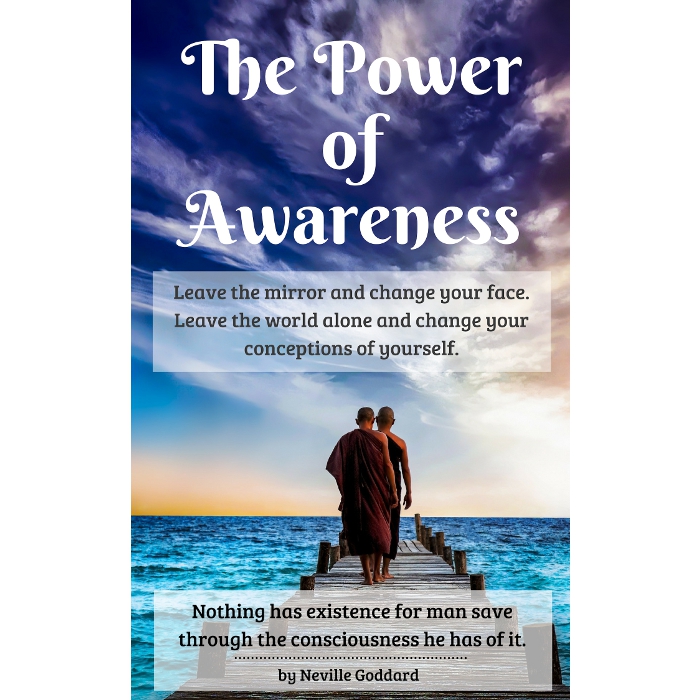
The Power of Awareness by Neville Goddard
The Power of Awareness is one of Neville Goddard's most complete books on consciousness, assumption, desire, attention, acceptance and persistence. It gives a clear structure for understanding how awareness becomes conditioned into the state you experience as life.

Book Guide
The Clearest Framework For The Law
The Power of Awareness is a major foundation book because Neville organizes the practical Law into a full path of understanding. Instead of giving only one technique, he explains the inner cause behind every technique: awareness, assumption, attention, desire, acceptance and the state you persist in.
What The Power of Awareness Is About
This book is about the creative power of consciousness. Neville begins with I AM and consciousness because everything else depends on what awareness is conscious of being. The world is not treated as something separate from the inner state. It is the expression of consciousness conditioned by assumption, attention and feeling.
The book gives a wider structure than many of Neville's shorter works. It explains desire, attention, attitude, renunciation, acceptance, free will, persistence, faith and failure. These subjects are not separate pieces. They describe how consciousness moves from an old state into a new one and how the new state becomes natural.
The central instruction is assumption. Neville teaches that the assumption of the wish fulfilled, if persisted in, hardens into fact. This does not mean repeating words with tension. It means accepting the state of the fulfilled desire as your own reality and continuing from that state until it becomes the level from which you live.
This book is especially helpful when you want Neville's teaching to feel organized. If Feeling Is the Secret gives the compact secret of feeling, The Power of Awareness gives the larger map of the Law: who you are conscious of being, what you desire, where your attention rests, what you accept, and what state you keep returning to.
The Main Ideas To Understand First
Awareness Is The Starting Point
Before any desire, problem or identity is named, there is awareness. Neville brings the whole work back to what you are conscious of being.
Assumption Is Acceptance
Assumption means accepting the fulfilled state as true inwardly. It becomes powerful when it changes identity, feeling and expectation.
Attention Feeds The State
Attention gives life to the state you dwell in. The book teaches you to direct attention toward the end rather than constantly feeding the old story.
Persistence Stabilizes The End
Persistence means continuing in the assumed state until it becomes natural, not anxiously checking the outer world for proof.
I AM And Consciousness
Neville begins with I AM because awareness is the root of every state. You can be conscious of being unwanted, loved, poor, supplied, ill, well, delayed, chosen, successful or forgotten. The state changes, but the awareness of being is the source that takes on the state. This is why Neville says consciousness is the one and only reality.
This matters because most people try to change life from the outside first. Neville asks you to look at the consciousness from which life is being experienced. What feels true about you? What do you keep assuming? What future feels natural? What identity do you return to when no one is watching? These questions reveal the state of awareness.
The book does not leave consciousness as an abstract idea. It brings it into daily experience. If your inner speech says you are always behind, consciousness is conditioned by that state. If you assume you are established and fulfilled, consciousness is conditioned differently. The outer world is met from the inner level that feels like you.
Understanding I AM makes the rest of the book clearer. Desire asks for a new I AM. Assumption accepts a new I AM. Attention feeds a chosen I AM. Persistence remains loyal to it. The whole book is a study of awareness becoming what it accepts itself to be.
The Power Of Assumption
The power of assumption is the practical center of the book. Neville teaches that an assumption, though false to the senses at first, becomes fact when it is persisted in. This does not make assumption a fantasy. It makes assumption the inner acceptance of a state before it is outwardly confirmed.
To assume is to move into the reality of the fulfilled desire. You do not stand outside the desire hoping it will arrive. You enter the state of the one who already is, already has, already knows. The desire becomes a change in being. That change in being is the assumption.
For example, if the desire is a loving relationship, the assumption is not merely "I want love." It is the inner state of being loved, secure and chosen. If the desire is wealth, the assumption is the consciousness of supply and ownership. If the desire is health, the assumption is the feeling of wholeness and ease. The assumption must correspond to the fulfilled end.
This is why Neville keeps the method inward. You assume the end and persist in that assumption. You allow your thoughts, reactions and inner conversations to begin from the new state. The world then reflects what consciousness has accepted.
Desire, Attention And Attitude
Desire is not treated as something wrong in this book. Neville sees desire as important because it points to a state seeking expression. The desire itself is a doorway. It shows you what consciousness is being invited to accept. The work is to stop treating desire as absence and begin entering the state of fulfillment.
Attention is the faculty that either keeps the old state alive or nourishes the new one. If attention constantly returns to fear, contradiction and delay, the old state remains familiar. If attention is directed toward the fulfilled end, the new state becomes stronger. Neville is not asking for tense thought control. He is teaching loyalty of attention.
Attitude is the inner atmosphere that grows from the state you occupy. Two people can face the same circumstance from entirely different attitudes because they are living from different assumptions. The attitude of the fulfilled state is not artificial confidence. It is the natural tone of the one who accepts the end.
This part of the book is very practical. You can ask yourself where your attention has been living. You can notice whether your attitude belongs to the old state or the fulfilled one. Then you can return attention to the end until the new attitude becomes natural.
Acceptance And The Effortless Way
Acceptance is one of the most important words in the book. Neville's work is not about forcing the outer world through mental pressure. The fulfilled state must be accepted inwardly. Acceptance is quieter than strain. It has the feeling of yes. The desire is no longer held at a distance; it is received as your own state.
This leads into the effortless way. Effortless does not mean careless or lazy. It means the creative act is not accomplished by outer force. The inner acceptance of the state is the work. When the state is accepted, action may still happen, but it comes from the new identity rather than from fear or desperation.
Many people make Neville's teaching heavy by trying to make something happen while remaining inwardly in the state of not having it. The Power of Awareness corrects that. It asks you to accept the fulfilled state and let the natural movement follow. The effort is in returning to the state, not in wrestling the world.
This is why acceptance feels like relief. You stop arguing with the old condition as though it has final authority. You begin living from the accepted end. The state becomes your inner home, and the outer world begins to answer that home.
Failure, Persistence And Faith
Neville includes failure in the book because failure is usually a failure to remain in the assumed state. This is not meant as blame. It is an instruction. If the end has not become natural, return to the state. If the old identity keeps being revived, notice where attention and assumption are still feeding it.
Persistence means continuing in the state of the wish fulfilled. It is not frantic repetition. It is faithfulness to the end. You persist when you return to the fulfilled assumption after the senses invite you back to the old state. You persist when your inner speech begins again from fulfillment. You persist when you refuse to make delay your identity.
Faith is the inner conviction that the unseen state is real. In this book, faith is practical because it gives stability to assumption. You do not need outer proof before you accept the state. You accept the state, and the proof follows the acceptance.
This is one of the reasons the book is so valuable. It gives you a way to understand apparent failure without collapsing into confusion. The answer is not to collect more techniques. The answer is to return to awareness, assumption, attention, acceptance and persistence.
The Case Histories
The case histories in The Power of Awareness show the Law in actual use. They are not included as decoration. Neville uses them to show that an inner change of state can appear as changed circumstances. The stories help you see how a fulfilled assumption becomes practical rather than theoretical.
The value of these examples is the pattern they reveal. A desire is defined. The end is assumed. The state is accepted inwardly. Then circumstances move in a way that reflects the accepted state. The rational mind may not have planned the bridge, but the end was already occupied in consciousness.
Read the case histories for structure. Ask what the person accepted, what state was entered, and what outer result corresponded to that state. This keeps the examples useful. They are not meant to make you copy someone else's details. They are meant to show you how the Law works in living experience.
They also bring confidence. When the book's principles feel large, the stories bring them down to life. Desire, assumption and persistence can apply to ordinary human needs: work, money, relationships, opportunities, health, decisions and freedom.
How To Practice What This Book Teaches
Choose one desire and define the end. Then ask what state would be natural if the desire were already fulfilled. Do not begin with the method. Begin with the state. Who would you be? What would feel settled? What inner conversation would now be unnecessary?
Enter that state through imagination. You might use a short scene, a sentence, a feeling of relief or a simple knowing. Let the end feel real enough that the old state loses some of its force. The aim is not to impress yourself with a complex scene. The aim is to accept the state.
Watch attention during the day. When attention returns to the old story, bring it back to the fulfilled end. This can be gentle. You are training consciousness to dwell in the desired state. The new state becomes natural through repeated return.
Persist without making persistence heavy. Return to the state because it is yours, not because you are trying to beg the world into movement. This is the tone of The Power of Awareness: awareness accepts, assumes, attends and persists until the fulfilled state is the natural home.
How To Read This Book With Real Understanding
Read The Power of Awareness as a framework. Each chapter gives you one part of the Law. I AM gives the foundation. Consciousness gives the cause. Assumption gives the method. Desire gives direction. Attention gives nourishment. Acceptance gives completion. Persistence gives stability.
It helps to read with one desire in mind. As you move chapter by chapter, ask how each idea applies to that desire. What are you conscious of being now? What assumption would imply fulfillment? Where has attention been going? What would acceptance feel like? What would persistence look like without strain?
This book can become a reference you return to often. When you are confused, open the chapter that matches the issue. If desire feels distant, study assumption. If you keep reacting to appearances, study attention. If practice feels forced, study acceptance and the effortless way. If you feel discouraged, study persistence and faith.
Read The Original Book
Download The Free Neville Book Collection
Continue into Neville's original words through the free Neville Goddard Manifesting book collection. Use this guide to understand the framework, then read the full text so Neville's teaching on awareness, assumption and persistence stays in his own language.
Download the free books